Creating financial projections for a new business doesn't have to require an expensive consultant, a finance degree, or a complicated spreadsheet.
Before a business has opened its doors, there isn't any historical financial performance to forecast from. Instead, you need to build projections around assumptions about how you expect the business to operate, including sales, pricing, expenses, hiring, startup costs, and financing.
Financial projection software designed for new businesses can help turn those assumptions into projected financial statements and other financial information you can use to evaluate your business idea, build a business plan, or prepare for financing.
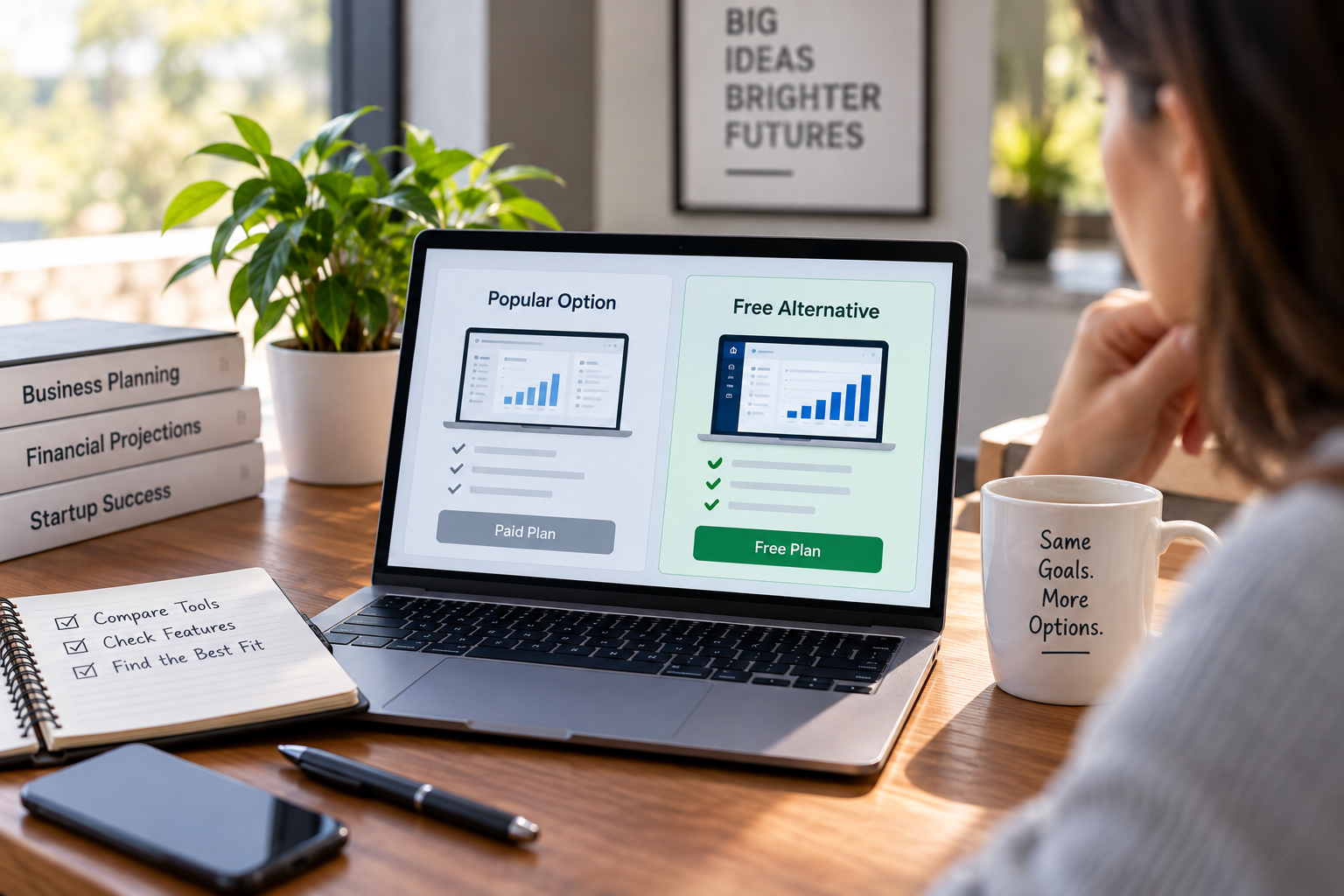
But financial planning tools vary significantly in what they provide, how much financial knowledge they require, and what “free” actually means.
If you're planning a new business and looking for free financial projection software, here's what to consider.
What Is Financial Projection Software for a New Business?
Financial projection software for a new business helps estimate how the business may perform financially based on assumptions about how you expect it to operate.
This is different from forecasting an existing business.
An operating business already has historical revenue, expenses, cash flow, and other financial data that can be analyzed when forecasting what may happen next. A new business doesn't have that history yet, so its projections need to be built from planning assumptions.
Depending on the type of business you're planning, those assumptions might include:
- Customers or units sold
- Pricing
- Sales growth
- Cost of goods sold
- Operating expenses
- Employees and payroll
- Startup costs
- Loans and financing
- Initial owner investment
Financial projection software can help connect those assumptions and turn them into a financial model of the business you're planning to launch.
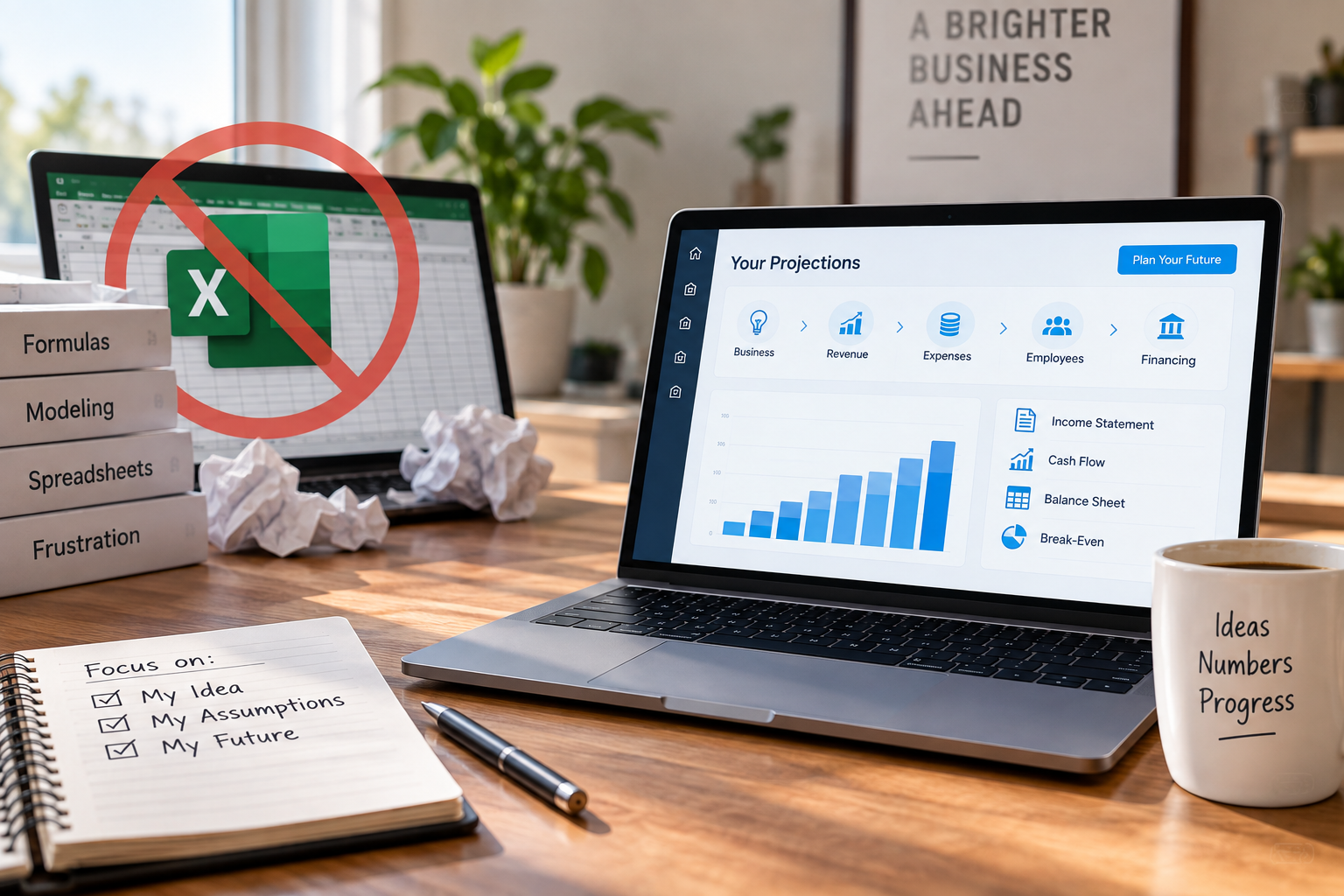
Why Use Financial Projection Software Instead of a Spreadsheet?
Spreadsheets can be excellent financial modeling tools for someone who knows how to build and maintain a financial model.
But that flexibility also creates complexity.
When creating projections manually, you need to determine how assumptions connect, build the appropriate formulas, create projected financial statements, and make sure changes to one assumption flow correctly throughout the model.
For example, changing your expected opening date, hiring plan, sales assumptions, or loan amount could affect multiple areas of the financial plan.
Financial projection software can reduce that burden by handling more of the underlying calculations automatically.
For an aspiring entrepreneur without financial modeling experience, that can make it much easier to focus on the assumptions behind the business rather than building the financial model itself.
What Should Financial Projection Software for a New Business Include?
The right software depends on the business you're planning and why you're creating projections, but there are several capabilities worth considering.
Revenue Planning
You should be able to build revenue around assumptions that make sense for the business.
That might include customers, units sold, pricing, transactions, recurring revenue, capacity, growth, or other business-specific drivers.
The goal should be to understand where projected revenue comes from rather than simply entering an arbitrary annual sales number.
Expense Planning
Your projections should account for what you expect it will cost to operate the business.
That can include rent, utilities, marketing, insurance, software, professional services, supplies, and other operating expenses.
Startup Cost Planning
Before your business begins operating, you may need to spend money on equipment, inventory, deposits, licenses, renovations, professional fees, technology, initial marketing, and other startup requirements.
Understanding these costs can help you estimate how much money you'll need before launching.
Workforce Planning
If you're planning to hire employees, your projections should account for when they will start, their salaries or wages, benefits, and other compensation-related expenses.
Hiring timing can have a significant effect on the amount of cash required to launch and grow the business.
Loan and Financing Modeling
If you're financing the new business, your financial plan should incorporate the amount borrowed, interest rate, repayment term, and expected payments.
You should also be able to identify other sources of funding, including your own investment in the business.
Projected Financial Statements
A complete set of projections should go beyond a revenue chart.
Look for the ability to create a projected income statement, cash flow statement, and balance sheet so you can see how your assumptions work together across the business.
Break-Even Analysis
Break-even analysis helps estimate how much revenue the business needs to generate to cover its costs.
This can help you evaluate whether the sales volume required to support the business appears realistic.
Scenario Modeling
Your original plan doesn't have to be your only plan.
Being able to change sales, pricing, expenses, hiring, financing, and other assumptions can help you explore how different decisions could affect the business before committing to them.
Is There Free Financial Projection Software for a New Business?
Yes, but it's important to understand what “free” means.
Some financial planning products offer temporary free trials. Others provide limited functionality unless you upgrade. You can also create projections yourself using spreadsheet software, although you'll still need to build and maintain the underlying financial model.
StartSmart is specifically designed for people planning a new business, rather than forecasting the performance of an existing operating company.
You answer guided questions about the business you're planning, including how you expect it to generate revenue, what it will cost to operate, how much you'll need to get started, your hiring plans, and how you expect to finance it.
StartSmart then automatically turns those planning assumptions into a financial model and projections.
You can use StartSmart to plan one new business completely free.
What Can You Create With StartSmart?
StartSmart is designed for aspiring entrepreneurs who are evaluating a business idea, building a business plan, preparing to launch, opening a franchise, or seeking financing for a new business.
It can help turn your planning assumptions into:
- Projected financial statements
- Revenue projections
- Operating expense projections
- Startup cost schedules
- Sources and uses of funds
- Employee and payroll plans
- Loan projections
- Cash-flow projections
- Break-even analysis
- DSCR analysis
- Supporting financial documentation
Because these outputs are generated from your assumptions, you can adjust the plan as you learn more about the business or consider different possibilities before launch.
Who Is StartSmart Designed For?
Someone Evaluating a New Business Idea
Before investing your savings, signing a lease, purchasing equipment, or leaving a job, financial projections can help you understand what would need to happen for the business to work financially.
Someone Writing a Business Plan
Projected financial statements and the assumptions supporting them are an important part of the financial section of many business plans.
Someone Applying for Financing to Start a Business
If you're applying for an SBA or other business loan to launch a company, a lender may request financial projections and supporting schedules to evaluate the proposed business.
Always follow the specific documentation requirements provided by your lender.
Someone Planning to Open a Franchise
A franchisor may provide information about the franchise system, but you still need to understand how your own startup costs, financing, staffing, expenses, and other assumptions could affect the business you're planning to open.
What If Your Business Is Already Operating?
If your business is already operating, StartSmart isn't designed to forecast from your actual historical financial performance.
That's a different financial planning problem.
Once a business is operating and generating financial history, forecasts can be based on actual revenue, expenses, cash flow, and other financial results rather than relying entirely on pre-launch assumptions.
Projection Genie's RunSmart is designed for that stage of the business lifecycle. RunSmart analyzes actual QuickBooks data to generate forward-looking forecasts and financial insights and lets business owners model how future decisions may affect the company at affordable rates.
In simple terms:
Planning a new business → StartSmart
Running and forecasting an existing business → RunSmart
Free Software Doesn't Mean Your Assumptions Don't Matter
Software can perform calculations, but the quality of projections for a new business still depends heavily on the assumptions you provide.
If you assume unrealistic sales, artificially low expenses, or an impossible growth rate, software can't make those assumptions realistic.
Research your market, understand your costs, think carefully about pricing, and document why your assumptions make sense.
Financial projection software should make the calculations easier. It shouldn't replace thoughtful business planning.
Create Financial Projections for Your New Business for Free
You shouldn't need to become a financial modeling expert just to understand the numbers behind a business you're considering starting.
StartSmart automatically turns your assumptions about a new business into a complete financial plan, projections, and supporting documentation without requiring you to build spreadsheets, formulas, or financial models yourself.
You can use StartSmart to plan one new business completely free.
Start building the financial plan for your new business with StartSmart for free today.