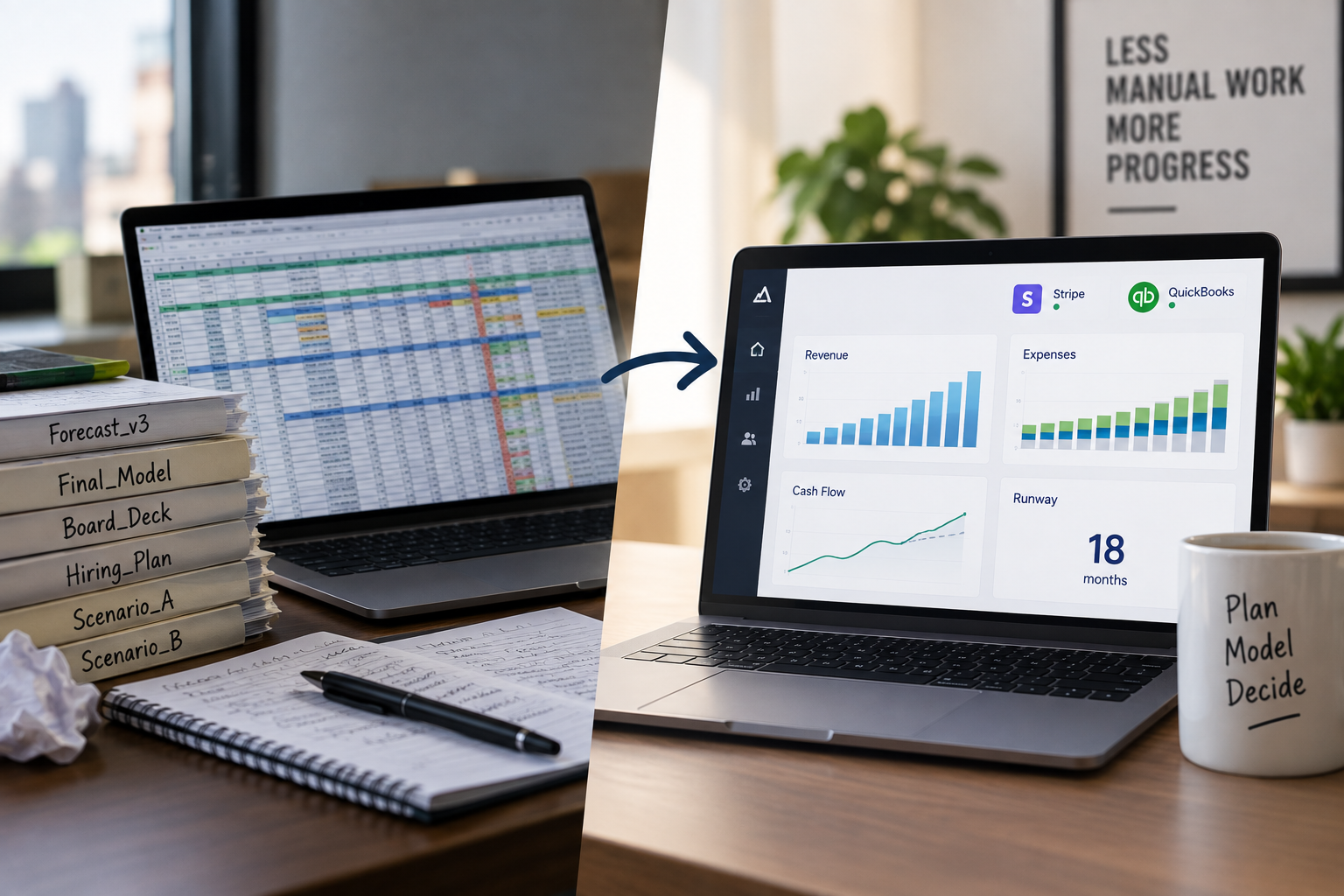
Is your small business financially healthy? Whether you're planning for growth, seeking funding, or simply trying to stay in control of your finances, understanding your company’s financial health is critical. Yet many business owners aren’t sure what to look at—or how to calculate the numbers that matter.
In this guide, we’ll break down the 13 key financial health metrics every small business owner should monitor and explain how you can track them automatically using your QuickBooks Online data with RunSmart by Projection Genie.
Why Financial Health Matters for Small Business Owners
Measuring your business’s financial health gives you insight into more than just profits. It helps you evaluate how well you're managing your resources, whether you can meet short-term and long-term obligations, and how efficiently your business is running.
These insights can help you:
- Make smarter financial and operational decisions
- Improve cash flow and reduce risk
- Build credibility with lenders or investors
- Identify warning signs early and adapt accordingly
But Here’s the Challenge…
Most small business owners don’t have the time or financial background to calculate and interpret these metrics on a monthly basis. Hiring a financial professional could help—but it’s often out of reach.
According to a SCORE survey, over 40% of small businesses cite cost as the main reason they avoid hiring CFOs or financial experts. And with full-time CFO salaries ranging from $150,000 to $400,000 per year, it’s easy to see why.
That’s where RunSmart by Projection Genie comes in. It helps small business owners unlock deep financial insights—without needing a CFO or an MBA.
The 13 Most Important Financial Health Metrics for Small Businesses
These metrics fall into five categories: capitalization, efficiency, profitability, liquidity, and solvency. Together, they provide a well-rounded picture of your business’s financial standing.
1. Capitalization
Total Debt to Capitalization Ratio
This ratio shows how much of your business is financed through debt versus equity. A high ratio can signal financial risk, especially if you're too reliant on borrowed funds.
2. Efficiency
Efficiency metrics assess how well you manage operations and assets.
- Days Sales of Inventory (DSI)
How long it takes to turn inventory into sales. A lower number typically means better inventory management. - Days Sales Outstanding (DSO)
Measures how quickly you collect payments from customers. High DSO may lead to cash flow issues. - Days Payable Outstanding (DPO)
Reflects how long you take to pay suppliers. Managing this wisely improves cash flow but taking too long may harm vendor relationships. - Asset Turnover Ratio
Indicates how efficiently your business uses its assets to generate revenue. A higher ratio generally reflects stronger performance.
3. Profitability
Profitability metrics show how well your business turns revenue into profit.
- Return on Assets (ROA)
Measures how much profit you generate for each dollar in assets. Higher is better. - Return on Equity (ROE)
Indicates how effectively you’re using equity investments to generate profit. - Operating Margin
Shows the percentage of revenue that remains after covering operating expenses. Strong margins suggest efficient operations.
4. Liquidity
Liquidity metrics assess your ability to meet short-term financial obligations.
- Working Capital Ratio
Compares current assets to liabilities. A ratio above 1 suggests your business can meet upcoming expenses. - Quick Ratio
A stricter version of the working capital ratio. It excludes inventory and provides a more immediate view of financial health.
5. Solvency
Solvency metrics evaluate your long-term financial stability and ability to manage debt.
- Interest Coverage Ratio
Measures your ability to pay interest on outstanding debt. Low coverage can indicate financial stress. - Debt to Assets Ratio
Shows the proportion of your business financed by debt. High ratios may raise red flags with lenders. - Fixed Charge Coverage Ratio (FCCR)
Assesses your ability to cover fixed obligations like rent, loan payments, and insurance.
Get All These Insights Instantly with RunSmart
Understanding these financial metrics is critical—but calculating them manually takes time, effort, and accounting knowledge. That’s where RunSmart by Projection Genie changes the game.
Just connect your QuickBooks Online account, and RunSmart will:
- Automatically calculate all 13 financial health metrics
- Display your performance in an intuitive health scorecard with charts for all metrics
- Help you easily identify areas for improvement—without hiring an expensive CFO
Stop guessing. Start knowing.
RunSmart gives small business owners a powerful, affordable way to monitor financial health, uncover risks, and make better decisions—with no spreadsheets or financial experts required.
👉 Learn more about RunSmart and get started today.